
Bntamnh E: Meaning, Benefits, Uses, and Everything You Should Know

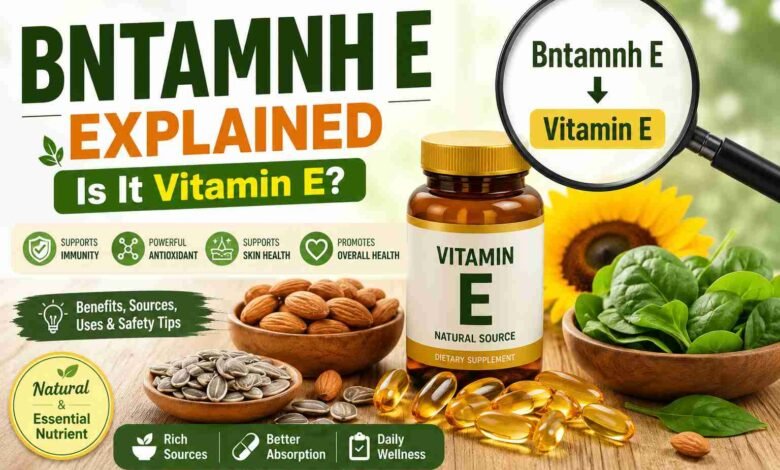
If you have recently come across the term Bntamnh E, you may be wondering what it actually means. The phrase looks unusual and does not resemble a standard vitamin name that most people are familiar with. Many users first notice it on product listings, social media posts, online marketplaces, or translated content and immediately start searching for answers.
The good news is that the mystery is usually much simpler than it appears. In most situations, Bntamnh E is simply a misspelled, mistranslated, or incorrectly formatted version of Vitamin E. While the term itself is not recognized as an official medical or nutritional name, it often points toward one of the most important vitamins used by the human body.
Understanding this distinction is important because people frequently make purchasing decisions based on product titles. A confusing name can create uncertainty, especially when it appears on supplements, beauty products, or health-related items. This guide explains what Bntamnh E usually means, how it relates to Vitamin E, and what consumers should know before trusting a product label.
Table of Contents
ToggleWhat Is Bntamnh E?
The term Bntamnh E is not an official scientific, medical, or nutritional term. You will not find it listed in trusted health textbooks, medical journals, or established vitamin references.
In most cases, the phrase appears to be a variation of Vitamin E that has been altered due to:
- Typing mistakes
- Translation errors
- Poorly formatted product listings
- Automatically generated content
- Copy-and-paste issues
- Low-quality online descriptions
Because of these factors, many people encounter the term and mistakenly assume it refers to a newly discovered nutrient or a special supplement. However, closer examination usually reveals that the intended meaning is simply Vitamin E.
Rather than treating Bntamnh E as a separate nutrient, it is better viewed as a clue that requires further verification.
Why Does Bntamnh E Appear Online?
The internet is full of content created by different sellers, marketers, translators, and automated systems. Even a small spelling error can spread quickly across multiple websites.
When one product listing contains a mistake, other websites often copy the same information. Over time, the incorrect term appears repeatedly and starts looking legitimate.
Several reasons explain why Bntamnh E appears online:
Translation Issues
Many product descriptions are translated automatically. During the translation process, words can become distorted or incorrectly converted.
Typographical Errors
Simple typing mistakes are common, especially on large online marketplaces where thousands of products are uploaded daily.
Reused Product Listings
Some sellers copy descriptions from other websites without reviewing the content carefully, causing errors to spread.
Automated Content Creation
AI-generated or automatically translated content can occasionally create unusual spellings that remain uncorrected.
This combination of factors explains why users continue searching for Bntamnh E despite its lack of official recognition.
Is Bntamnh E the Same as Vitamin E?
In the majority of situations, yes.
When people encounter Bntamnh E on supplement pages or health-related products, the term almost always points back to Vitamin E.
However, consumers should never rely solely on a product title. Instead, they should examine:
- The ingredient list
- Supplement facts panel
- Product description
- Manufacturer information
- Nutritional details
For example, if a product title includes Bntamnh E but the ingredient list contains alpha-tocopherol or Vitamin E, the intended meaning becomes much clearer.
The title may be confusing, but the nutritional facts usually provide the real answer.
What Is Vitamin E?
Vitamin E is an essential nutrient that plays an important role in maintaining normal body functions.
It belongs to a group of compounds known as fat-soluble vitamins. Unlike water-soluble vitamins, which leave the body quickly, fat-soluble vitamins can be stored for future use.
Vitamin E is widely recognized for its role in:
- Supporting cellular health
- Protecting cells from oxidative stress
- Supporting immune function
- Helping maintain overall wellness
Because of these benefits, Vitamin E is commonly found in foods, supplements, skincare products, and nutritional formulations.
The most important naturally occurring form used by the human body is called alpha-tocopherol.
Although the scientific name may sound complex, most consumers simply know it as Vitamin E.
How Vitamin E Supports the Body
Vitamin E performs several important functions that contribute to overall health.
Cell Protection
One of its primary roles is helping protect cells from damage caused by free radicals. These unstable molecules are naturally produced during normal body processes.
Over time, free radical activity can contribute to cellular stress. Vitamin E acts as an antioxidant that helps reduce this impact.
Immune Support
The immune system relies on various nutrients to function properly. Vitamin E contributes to maintaining normal immune system activity.
Skin Health
Many skincare products include Vitamin E because it is commonly associated with healthy-looking skin.
This is one reason why Vitamin E remains popular in beauty and wellness industries.
Overall Wellness
Rather than serving as a miracle solution, Vitamin E works alongside other nutrients to support normal bodily functions and long-term health.
Natural Sources of Vitamin E
One of the best ways to obtain Vitamin E is through a balanced diet.
Many everyday foods naturally contain this important nutrient.
Nuts
Almonds are among the richest natural sources of Vitamin E.
Other beneficial nuts include:
- Hazelnuts
- Pine nuts
- Peanuts
Seeds
Seeds provide healthy fats along with valuable Vitamin E content.
Common examples include:
- Sunflower seeds
- Pumpkin seeds
- Sesame seeds
Vegetable Oils
Several plant-based oils naturally contain Vitamin E, including:
- Sunflower oil
- Safflower oil
- Wheat germ oil
Leafy Green Vegetables
Green vegetables contribute smaller but meaningful amounts of Vitamin E.
Examples include:
- Spinach
- Swiss chard
- Kale
Eating a variety of these foods can help support normal Vitamin E intake without requiring supplements.
Understanding Vitamin E Supplements
Vitamin E supplements are widely available and come in different forms.
Some people use supplements because they have specific dietary needs, while others purchase them based on online recommendations.
Before buying any supplement associated with Bntamnh E, consumers should carefully examine the label.
Important information to check includes:
- Active ingredient
- Amount per serving
- Serving size
- Manufacturer details
- Expiration date
- Safety instructions
A reputable supplement should clearly provide all of this information.
Common Names Found on Vitamin E Labels
Many shoppers become confused when reading supplement labels because Vitamin E can appear under different names.
Alpha-Tocopherol
This is the most recognized form of Vitamin E.
Tocopheryl Acetate
Another common form frequently used in supplements and skincare products.
D-Alpha Tocopherol
A naturally sourced form often found in nutritional supplements.
DL-Alpha Tocopherol
A synthetic form commonly used in commercial products.
Understanding these names can help consumers identify genuine Vitamin E products regardless of how the front label is presented.
Can You Get Too Much Vitamin E?
Although Vitamin E is beneficial, more is not always better.
Because it is a fat-soluble vitamin, excessive amounts can accumulate in the body over time.
Most healthy individuals can safely obtain Vitamin E through food without concern.
Problems generally arise when extremely high-dose supplements are taken regularly without medical guidance.
Moderation remains the safest approach.
Possible Side Effects of Excessive Vitamin E
Vitamin E obtained naturally from food is generally considered safe.
However, excessive supplementation may increase the likelihood of side effects.
Potential issues may include:
- Stomach discomfort
- Nausea
- Headaches
- Digestive upset
High-dose supplementation may also increase bleeding risk in certain individuals.
This is why consumers should never assume that a larger dose automatically provides greater benefits.
Who Should Be Careful With Vitamin E Supplements?
Certain groups should exercise additional caution before using Vitamin E supplements.
These include:
People Taking Blood-Thinning Medications
Vitamin E may affect blood clotting in some circumstances.
Individuals With Bleeding Disorders
Supplement use should be discussed with a healthcare professional.
People Preparing for Surgery
Doctors often review supplement use before medical procedures.
Individuals Taking Multiple Supplements
Vitamin E may already be present in:
- Multivitamins
- Beauty supplements
- Immune support formulas
- Skin health products
Checking total intake helps avoid accidental overconsumption.
How to Evaluate a Product That Uses the Term Bntamnh E
If you encounter a product using the term Bntamnh E, follow a few simple steps.
Check the Ingredient List
Look for Vitamin E, alpha-tocopherol, or related compounds.
Verify Manufacturer Information
Trustworthy products clearly identify the company responsible for production.
Read the Supplement Facts Panel
This section provides the most reliable information about the product.
Avoid Unrealistic Claims
Be cautious if a product promises:
- Instant results
- Miracle cures
- Guaranteed outcomes
Legitimate supplements typically make realistic and evidence-based statements.
Why Clear Labels Matter More Than Fancy Names
Many companies focus heavily on creative marketing, but the most important information is always found on the label.
A trustworthy supplement should clearly explain:
- What it contains
- How much it contains
- How to use it
- Who manufactures it
Consumers should prioritize transparency over flashy branding.
When a product uses confusing terminology such as Bntamnh E, the importance of reading the complete label becomes even greater.
Conclusion
The term Bntamnh E may look mysterious, but in most situations it simply refers to Vitamin E through a spelling error, translation issue, or poorly formatted product description.
Rather than assuming it represents a new nutrient or breakthrough discovery, consumers should focus on verifying product information through ingredient lists and supplement facts panels.
Vitamin E itself remains an important nutrient that supports cell protection, immune function, and overall wellness. It can be obtained naturally through foods such as nuts, seeds, vegetable oils, and leafy green vegetables.
Whenever you encounter unfamiliar health terminology online, remember a simple rule: trust the facts panel more than the product title. Clear information, transparent labeling, and realistic claims are the best indicators of a reliable product.
FAQs
1. What does Bntamnh E mean?
Bntamnh E is usually a misspelled or mistranslated version of Vitamin E rather than a separate nutrient.
2. Is Bntamnh E an official medical term?
No. It is not recognized as an official scientific, medical, or nutritional term.
3. What does Vitamin E do?
Vitamin E helps protect cells, supports immune function, and contributes to overall health.
4. Which foods contain Vitamin E?
Almonds, sunflower seeds, spinach, wheat germ oil, and safflower oil are common sources of Vitamin E.
5. Should I buy a product labeled Bntamnh E?
Before purchasing, check the ingredient list and supplement facts panel to confirm that the product actually contains Vitamin E and comes from a reputable manufacturer.
