Rank in COD: A Complete Guide to Understanding and Improving Your Competitive Standing

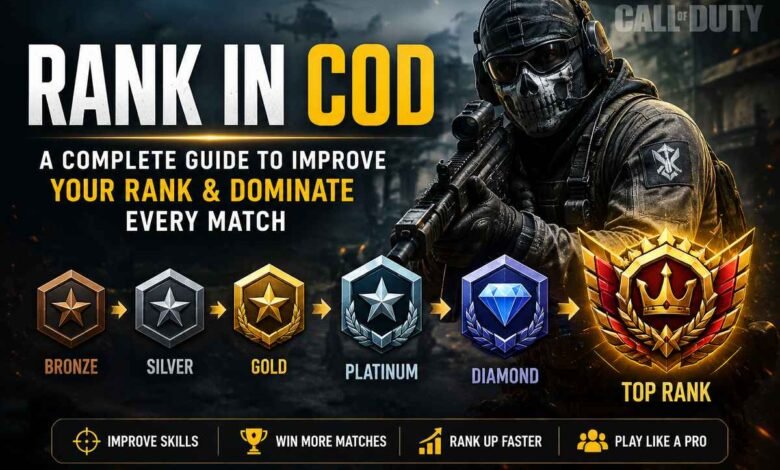
Competitive multiplayer gaming has become more advanced than ever, and Call of Duty (COD) remains one of the most popular franchises in the world. Whether you play casually or compete seriously, your rank in COD is one of the clearest indicators of your skill level and performance. It reflects how well you perform against other players and often determines the quality of opponents and teammates you encounter.
Many players focus solely on wins and kills, but ranking systems are designed to measure a wider range of factors. Understanding how ranks work can help you improve more efficiently, make smarter gameplay decisions, and progress through the competitive ladder with greater consistency.
This guide explains everything you need to know about COD rankings, how they function, and the most effective ways to climb higher.
Table of Contents
ToggleWhat Does Rank Mean in Call of Duty?
A rank is a progression system used to evaluate a player’s performance within the game. In most competitive COD modes, players earn or lose ranking points based on match results and individual contributions.
The purpose of ranking systems is to create balanced matches. Players with similar skill levels are grouped together, resulting in fairer competition and a more enjoyable experience.
Your rank often serves as a public representation of your abilities. Higher-ranked players generally demonstrate stronger game knowledge, better aim, improved communication, and superior decision-making under pressure.
Why Your Rank Matters
Many players view ranks as simple cosmetic achievements, but they have a much larger impact on gameplay.
A higher ranking can provide:
- More competitive matches
- Greater recognition within the community
- Access to exclusive rewards in some seasons
- Better opportunities to join skilled teams
- A clearer measurement of personal improvement
Tracking your progress through the ranking system also helps identify strengths and weaknesses. Instead of relying on subjective opinions about performance, ranks provide measurable feedback over time.
How the Ranking System Works
While specific details may vary between different COD titles, most ranked modes follow similar principles.
Players gain points when they perform well and win matches. Conversely, losses often result in a reduction of ranking points. The system usually evaluates multiple factors, including:
Match Victories
Winning remains one of the most important factors in competitive play. Consistent victories demonstrate the ability to contribute positively to team success.
Individual Performance
Many ranking systems also consider personal statistics such as:
- Eliminations
- Objective captures
- Damage dealt
- Assists
- Survival time
Strong individual performance can sometimes reduce penalties after losses or increase rewards after wins.
Strength of Opponents
Defeating highly skilled opponents may provide greater ranking gains compared to defeating lower-ranked players. Similarly, losses against stronger teams may result in smaller deductions.
Common Rank Tiers in COD
Most ranked systems organize players into multiple divisions. Although names may vary between games, the general structure follows a progression from beginner levels to elite tiers.
Bronze
Bronze is often the starting point for new competitive players. It focuses on learning core mechanics and understanding game modes.
Silver
Players in Silver usually possess basic map awareness and weapon knowledge. Consistency becomes increasingly important at this level.
Gold
Gold players often demonstrate solid gun skill and a better understanding of objectives. Competition becomes noticeably tougher.
Platinum
Platinum represents above-average performance. Players typically show strong positioning, communication, and game sense.
Diamond
Diamond players are highly skilled and capable of competing against advanced opponents consistently.
Crimson and Higher Tiers
These levels are generally reserved for the strongest players in the community. Reaching them requires excellent mechanics, teamwork, and strategic thinking.
Factors That Influence Your Rank in COD
Many players assume kills alone determine progression, but ranking systems are far more complex.
Objective Play
Capturing points, defending objectives, and completing mission-specific tasks contribute significantly to success.
Players who focus exclusively on eliminations often struggle to advance because objectives usually carry substantial weight.
Team Coordination
Competitive modes reward teamwork. Effective communication and coordinated strategies frequently outperform individual talent.
Consistency
One exceptional match will not dramatically improve your standing. Long-term consistency is what drives meaningful progression.
Decision-Making
Knowing when to engage, retreat, rotate, or support teammates can have a greater impact than raw aiming ability.
Best Strategies to Improve Your Rank
Improving your competitive standing requires a combination of skill development and strategic thinking.
Master a Limited Weapon Pool
Many players constantly switch weapons, which slows improvement. Instead, focus on mastering a few strong loadouts.
Learning recoil patterns, effective ranges, and movement techniques with specific weapons creates greater consistency.
Learn Every Map Thoroughly
Map knowledge provides a major advantage.
Understanding:
- Power positions
- Spawn locations
- Common routes
- Objective areas
- High-traffic zones
helps players predict enemy movements and make smarter decisions.
Prioritize Objectives
Objective-focused gameplay often leads to more victories than chasing eliminations.
Winning matches remains one of the most reliable ways to increase your competitive standing over time.
Review Your Gameplay
Watching recorded matches can reveal mistakes that are difficult to notice during live gameplay.
Common issues include:
- Poor positioning
- Missed opportunities
- Unnecessary engagements
- Weak rotations
Even small adjustments can produce significant improvements.
The Importance of Communication
Communication is one of the most overlooked aspects of competitive COD.
Clear callouts help teammates react faster and make better decisions.
Effective communication includes:
- Reporting enemy locations
- Announcing objective pressure
- Sharing spawn information
- Coordinating pushes
- Warning teammates about flanks
Teams that communicate consistently usually outperform teams with better individual talent but poor coordination.
Mistakes That Prevent Ranking Progress
Many players remain stuck at the same level because of recurring mistakes.
Playing Too Aggressively
Constantly rushing opponents can result in unnecessary deaths and reduced team effectiveness.
Ignoring Objectives
Objectives often determine match outcomes. Players who prioritize personal statistics over team success frequently struggle to advance.
Blaming Teammates
While teammates influence results, focusing solely on their mistakes prevents personal growth.
Improvement begins by identifying factors within your own control.
Changing Settings Constantly
Frequent adjustments to sensitivity, loadouts, and controls can slow development. Consistency allows skills to build more effectively.
Mental Strength and Competitive Success
Mechanical skill alone is not enough for sustained progression.
Mental discipline plays a major role in performance.
Staying Calm Under Pressure
Competitive matches often involve stressful situations. Remaining composed helps maintain accuracy and decision-making quality.
Managing Losing Streaks
Every player experiences setbacks. Avoiding frustration and focusing on long-term improvement is essential.
Setting Realistic Goals
Instead of targeting multiple divisions at once, focus on achievable milestones. Small victories create momentum and motivation.
How Long Does It Take to Climb the Rankings?
The time required varies significantly between players.
Several factors influence progression:
- Current skill level
- Match frequency
- Team coordination
- Learning habits
- Consistency
Some players may advance rapidly, while others require weeks or months to reach higher divisions. The most successful competitors focus on improvement rather than immediate results.
When skills improve, ranking progression usually follows naturally.
Future of Competitive Ranking in COD
Call of Duty continues to refine its competitive systems with each new release. Developers regularly adjust matchmaking algorithms, ranking formulas, and seasonal rewards to improve fairness and player engagement.
As esports and competitive gaming continue growing worldwide, ranking systems are expected to become even more sophisticated. Future updates may include better performance tracking, advanced matchmaking technologies, and enhanced competitive rewards.
For players seeking long-term success, understanding ranking mechanics and continuously improving gameplay will remain the most effective approach.
Conclusion
Your rank in COD is more than just a badge beside your username. It represents your ability to compete, adapt, communicate, and contribute to team success. While many players focus solely on eliminations, true progression comes from mastering objectives, understanding maps, improving decision-making, and maintaining consistency.
Climbing the competitive ladder requires patience and dedication, but every match offers an opportunity to learn and improve. By focusing on fundamentals and developing strong habits, players can steadily rise through the ranks and enjoy a more rewarding competitive experience.
FAQs
1. What is the highest rank in COD?
The highest rank varies by title, but top competitive tiers are usually reserved for elite players and professional-level competitors.
2. Does winning matter more than kills?
In most ranked modes, winning is generally more important than individual kill counts.
3. Can I improve my rank by playing objectives?
Yes. Objective play often contributes significantly to match success and ranking progression.
4. How often should I play ranked matches?
Regular practice helps improve consistency, but quality gameplay is more important than playing large numbers of matches.
5. Why am I stuck at the same rank?
Common reasons include inconsistent performance, poor communication, lack of map knowledge, and ignoring objectives. Improving these areas can help break through ranking plateaus.