The Yearner and the Nonchalant: Understanding Two Opposite Ways of Relating to People

Human relationships are shaped by personality, emotional needs, communication habits, and life experiences. Some people naturally seek closeness, reassurance, and emotional connection, while others tend to be more independent and reserved. These differences often become most visible in friendships, family relationships, and romantic partnerships.
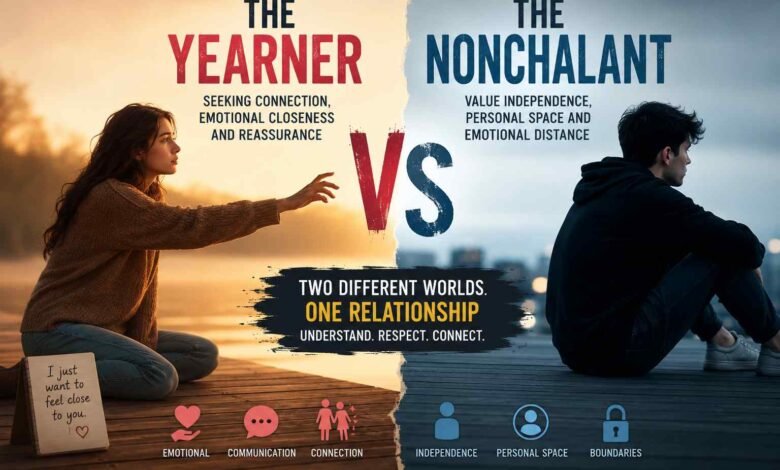
One personality pattern that has gained attention in recent years is the Yearner. This term is often used to describe someone who deeply desires connection, emotional intimacy, and consistent communication. On the opposite side is the nonchalant individual, a person who appears calm, detached, or less emotionally expressive.
Understanding these two approaches to relationships can help people communicate better, avoid misunderstandings, and build healthier connections. Rather than viewing one style as better than the other, it is more useful to recognize how each perspective influences behavior and expectations.
Table of Contents
ToggleWhat Does the Term Yearner Mean?
A Yearner is someone who strongly values emotional closeness and meaningful relationships. This person often seeks reassurance, enjoys deep conversations, and feels fulfilled when there is a strong emotional bond with others.
The term is commonly used in online discussions about dating and attachment styles, but its meaning extends beyond romance. A person can show these traits in friendships, family relationships, and professional connections as well.
People who fit this description are usually highly invested in relationships. They may enjoy frequent communication, appreciate emotional transparency, and place significant importance on maintaining strong personal connections.
Key Characteristics of a Yearner
Individuals who identify with this personality pattern often display several common traits.
They tend to be emotionally expressive and comfortable discussing feelings. They may frequently check in on loved ones and enjoy conversations that go beyond surface-level topics. Many also place a high value on loyalty and commitment.
Another characteristic is a strong desire for clarity. Uncertainty in relationships can feel uncomfortable because they prefer knowing where they stand with others. As a result, they may ask questions, seek reassurance, or initiate conversations to maintain emotional security.
These qualities often make them caring friends, attentive partners, and supportive family members.
Understanding the Nonchalant Personality
The nonchalant personality represents a different approach to relationships. These individuals are often independent, self-reliant, and less expressive about their emotions.
Rather than seeking constant reassurance, they may feel comfortable with space and autonomy. They often communicate affection through actions rather than words and may not always feel the need to discuss emotions in detail.
Being nonchalant does not necessarily mean someone lacks feelings. In many cases, they simply process emotions differently and prefer a more reserved style of interaction.
Why These Opposites Often Attract
Relationships frequently bring together people with contrasting personalities. A deeply emotional individual may be drawn to someone who appears calm and composed, while a reserved person may appreciate the warmth and openness of a more expressive partner.
These differences can initially create balance. One person introduces emotional depth, while the other provides stability and perspective. Each partner may admire qualities they do not naturally possess themselves.
However, attraction alone is not enough. Without understanding and communication, these differences can eventually create tension.
Common Challenges Between a Yearner and a Nonchalant Person
One of the most frequent challenges involves communication expectations. A person who values regular contact may interpret delayed responses as disinterest, while a more independent individual may see infrequent communication as completely normal.
Another challenge is emotional expression. One person may openly discuss feelings and relationship concerns, while the other prefers to process emotions privately. This difference can create misunderstandings if both people assume their approach is the standard one.
Over time, frustration can develop when expectations remain unspoken. The emotionally expressive person may feel ignored, while the reserved individual may feel pressured.
The Role of Attachment Styles
Psychologists often connect relationship patterns to attachment styles developed through life experiences.
People who strongly seek closeness sometimes display characteristics associated with anxious attachment. They may value reassurance and emotional availability. Meanwhile, highly independent individuals may exhibit traits linked to avoidant attachment, preferring personal space and self-sufficiency.
It is important to note that these are broad tendencies rather than strict categories. Human behavior is complex, and many people show a combination of traits depending on circumstances and relationships.
Understanding attachment patterns can provide valuable insight into why certain relationship dynamics occur repeatedly.
Strengths of Being a Yearner
Although this personality type is sometimes portrayed negatively in online discussions, it comes with many strengths.
People who prioritize connection often create deep and meaningful relationships. They are frequently empathetic listeners who genuinely care about the well-being of others. Their willingness to express emotions can encourage honesty and vulnerability within relationships.
Many also possess strong emotional intelligence. Because they pay close attention to feelings and interpersonal dynamics, they often recognize emotional needs that others may overlook.
These qualities can contribute to lasting friendships and supportive partnerships.
Strengths of a Nonchalant Personality
The nonchalant approach also offers valuable advantages.
Individuals with this mindset are often resilient and independent. They may handle stress effectively because they are comfortable relying on themselves. Their ability to remain calm during emotionally charged situations can help prevent unnecessary conflict.
They are often less influenced by external validation and may maintain a strong sense of personal identity. This independence can be beneficial in both personal and professional settings.
When balanced with empathy and communication, these traits can contribute to healthy and stable relationships.
Finding Balance in Relationships
Successful relationships rarely require people to change who they are entirely. Instead, they thrive when individuals learn to understand and respect each other’s needs.
Someone who desires frequent connection can benefit from recognizing that independence is not always a sign of emotional distance. At the same time, a reserved person can make an effort to provide reassurance when it is important to their partner.
Balance emerges when both individuals adapt without abandoning their core personalities. Healthy communication allows differences to become strengths rather than sources of conflict.
Communication Strategies That Work
Clear communication is one of the most effective ways to bridge personality differences.
Discussing expectations openly can prevent misunderstandings before they develop. For example, conversations about communication frequency, emotional needs, and personal boundaries can create greater clarity.
Active listening is equally important. Instead of focusing solely on one’s own perspective, both people should make an effort to understand how the other experiences relationships.
Consistency also matters. Small actions, such as checking in regularly or respecting requests for personal space, can build trust over time.
Social Media and Modern Relationship Dynamics
Modern communication has amplified discussions about relationship styles. Social media platforms often simplify complex behaviors into labels, creating categories that are easy to share and discuss.
While these labels can be useful for understanding certain tendencies, they should not define an entire person. Human behavior exists on a spectrum, and most individuals do not fit perfectly into a single category.
Rather than using labels to judge others, it is more productive to use them as tools for self-awareness and personal growth.
Can a Yearner Become More Independent?
Personal growth is possible for everyone. Individuals who strongly seek connection can develop greater emotional independence without losing their caring nature.
Building confidence, pursuing personal goals, maintaining hobbies, and strengthening self-esteem can help create a healthier balance between connection and independence.
The goal is not to stop valuing relationships but to ensure that happiness and self-worth are not entirely dependent on external validation.
Final Thoughts
The contrast between the Yearner and the nonchalant personality highlights the diversity of human relationships. One approach emphasizes emotional closeness and connection, while the other values independence and personal space.
Neither style is inherently right or wrong. Both bring unique strengths, challenges, and perspectives to relationships. The key to success lies in understanding these differences rather than trying to eliminate them.
When people communicate openly, respect each other’s needs, and remain willing to adapt, even the most contrasting personalities can form meaningful and lasting connections.
FAQs
1. What is a Yearner?
A Yearner is a person who strongly values emotional connection, closeness, and meaningful relationships.
2. Is being a Yearner a bad thing?
No. It often reflects empathy, emotional awareness, and a desire for deep connections.
3. What does nonchalant mean in relationships?
A nonchalant person is typically more independent, reserved, and less expressive about emotions.
4. Can a Yearner and a nonchalant person have a healthy relationship?
Yes. Strong communication and mutual understanding can help both personalities work well together.
5. Is the term Yearner related to attachment styles?
It can be associated with certain attachment tendencies, but it is not an official psychological diagnosis.
More Details : Bntamnh E: Meaning, Benefits, Uses, and Everything You Should Know