The Invisible String Theory: Why People Feel Connected Across Distance and Time

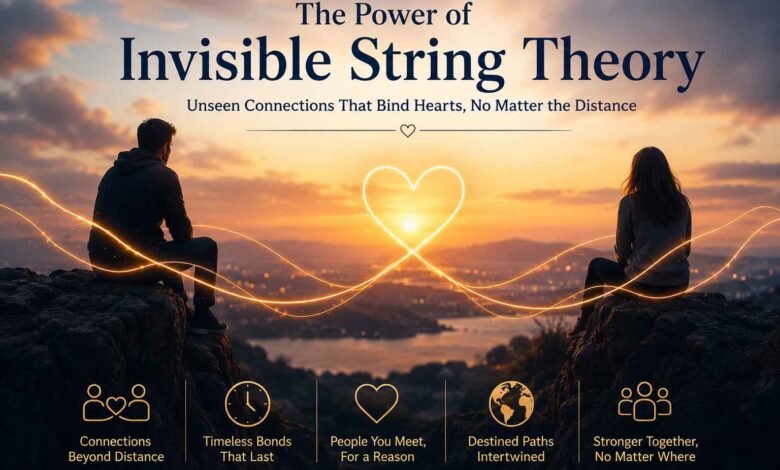
The concept of Invisible String Theory has captured the imagination of people around the world because it offers a simple yet meaningful way to explain deep human connections. While it is not a scientific theory in the traditional sense, the idea suggests that people who are meant to be connected are linked by an unseen thread, regardless of distance, time, or circumstances. This belief has become popular through literature, social media, psychology discussions, and personal storytelling.
Many individuals find comfort in the notion that important relationships are connected by something greater than coincidence. Whether viewed as a metaphor, a philosophical belief, or an emotional framework, this concept continues to resonate because it reflects the human desire for belonging and meaningful relationships.
Table of Contents
ToggleUnderstanding the Origins of the Concept
The roots of the idea can be traced back to East Asian folklore, particularly a legend often referred to as the “Red Thread of Fate.” According to the story, an invisible red thread connects people who are destined to meet or influence each other’s lives. The thread may stretch, twist, or tangle, but it never breaks.
Over time, this traditional legend evolved and spread across cultures. Modern interpretations often remove the specific red thread imagery and focus instead on a broader idea of unseen connections between people. Today, many refer to this belief as Invisible String Theory, using it as a way to explain unexpected encounters, lifelong friendships, family bonds, and romantic relationships.
What Does Invisible String Theory Mean?
At its core, Invisible String Theory proposes that significant people in our lives are connected through an unseen bond. This bond is not necessarily physical or measurable. Instead, it symbolizes emotional, spiritual, or psychological connections that seem to exist beyond ordinary explanations.
For example, some people recall meeting a close friend by chance and later realizing how many overlapping experiences they shared before meeting. Others describe reconnecting with someone years later and feeling an immediate sense of familiarity. These experiences often strengthen belief in the idea that certain relationships are guided by an invisible connection.
Rather than predicting destiny, the concept encourages people to recognize the meaningful relationships that shape their lives.
Why the Idea Resonates with So Many People
Human beings naturally search for meaning and patterns. Relationships are among the most important aspects of life, so it is understandable that people seek explanations for powerful emotional bonds.
One reason the theory remains popular is that it provides comfort during uncertainty. When relationships face challenges, distance, or separation, the belief in an unseen connection can help people maintain hope. It reassures individuals that meaningful bonds are not always dependent on physical proximity.
Additionally, the concept aligns with common human experiences. Many people have stories about meeting someone at exactly the right moment or forming an unexpected connection that changed their lives. These experiences often feel too significant to be mere coincidence.
The Psychological Perspective
From a psychological standpoint, the appeal of this idea can be linked to how humans form attachments and interpret experiences. People are social beings who rely on relationships for emotional support, identity, and personal growth.
Psychologists suggest that individuals often create narratives to understand important life events. The belief in unseen connections can serve as a framework that helps people make sense of meaningful encounters and relationships.
Research in social psychology also shows that shared experiences, mutual values, and emotional vulnerability can create strong bonds between individuals. While psychology may not support a literal invisible string, it recognizes that human connections can feel remarkably powerful and enduring.
The Role of Coincidence and Synchronicity
Many discussions surrounding the concept involve coincidence and synchronicity. Synchronicity, a term introduced by Swiss psychiatrist Carl Jung, refers to meaningful coincidences that appear related despite lacking a direct causal connection.
Examples include meeting someone repeatedly in different places before becoming friends or discovering that a new acquaintance shares unusual similarities with your life story. Such events often leave a lasting impression because they seem unlikely or significant.
People who embrace the theory often interpret these moments as signs of a deeper connection. Whether viewed through a spiritual lens or as a psychological phenomenon, these experiences contribute to the enduring popularity of the concept.
Invisible String Theory in Relationships
Romantic relationships are one of the most common areas where this belief is discussed. Many couples describe feeling an immediate connection when they first meet. Others tell stories of crossing paths multiple times before eventually forming a relationship.
The idea does not suggest that every relationship is predetermined. Instead, it highlights the possibility that certain people play meaningful roles in each other’s lives. Some relationships provide companionship, while others offer important life lessons and personal growth.
By focusing on connection rather than certainty, the concept encourages people to value the relationships that shape their journeys.
Family Bonds and Lifelong Connections
The idea is not limited to romance. Family relationships often serve as powerful examples of enduring emotional connections. Parents and children, siblings, and extended family members frequently experience bonds that remain strong despite physical distance or long periods apart.
These relationships often involve shared history, memories, and emotional understanding that cannot easily be replaced. The concept of an invisible connection provides a meaningful way to describe why these bonds often remain resilient through life’s challenges.
For many people, family relationships demonstrate that connection extends beyond daily interaction and can endure across generations.
Friendships and Unexpected Encounters
Friendships also play an important role in discussions about unseen connections. Some friendships begin under ordinary circumstances yet become deeply influential over time. Others emerge from seemingly random encounters that eventually transform a person’s life.
People often reflect on how a single conversation, chance meeting, or shared experience led to a lifelong friendship. Looking back, these moments can appear interconnected, creating the impression that the friendship was meant to happen.
Such experiences contribute to the widespread appeal of Invisible String Theory, as they highlight the unpredictable yet meaningful nature of human relationships.
Cultural Influence in Modern Society
In recent years, the concept has gained significant visibility through books, films, television shows, and social media. Stories that explore themes of destiny, connection, and personal relationships often incorporate similar ideas.
Social media platforms have also played a major role in spreading awareness. Users frequently share personal stories about unexpected reunions, meaningful coincidences, and relationships that seem guided by fate. These stories resonate because they reflect experiences many people have encountered themselves.
As a result, the concept has become part of modern cultural conversations about relationships and personal growth.
A Symbol of Hope and Connection
One of the most meaningful aspects of the theory is its ability to inspire hope. Life often involves separation, uncertainty, and unexpected change. During difficult times, the belief that important connections remain intact can provide emotional reassurance.
Even for those who do not interpret the idea literally, the symbolism remains powerful. The invisible string serves as a reminder that relationships can continue to influence us long after circumstances change. Memories, lessons, and emotional bonds often remain present throughout life.
This symbolic interpretation allows people from different backgrounds and belief systems to connect with the concept in their own way.
Conclusion
The idea of Invisible String Theory continues to fascinate people because it speaks to a universal human experience: the desire for meaningful connection. Whether understood as folklore, symbolism, psychology, or personal belief, it offers a compelling way to think about the relationships that shape our lives.
While there is no scientific evidence proving that an actual invisible thread links people together, the emotional truth behind the concept remains powerful. Many of life’s most important relationships emerge in unexpected ways, leaving lasting impacts that are difficult to explain through coincidence alone.
Ultimately, the theory reminds us to appreciate the people who enter our lives, recognize the value of meaningful relationships, and remain open to the unexpected connections that may still lie ahead.
FAQs
1. What is Invisible String Theory?
Invisible String Theory is the belief that people who are meant to influence each other’s lives are connected by an unseen bond, regardless of distance or time.
2. Is Invisible String Theory scientifically proven?
No, it is not a scientific theory. It is generally viewed as a symbolic, cultural, or philosophical concept about human connections.
3. Where did the idea come from?
The concept is largely inspired by ancient East Asian folklore, particularly the legend of the Red Thread of Fate, which describes destined connections between people.
More Details : Dojen Moe: Understanding the Blend of Doujin Creativity and Moe Culture in Modern Digital Communities